Announcements
Received an account and is in doubt?You are not alone. The scam of the fake boleto and Pix it has become a common digital trap in Brazil.
The good news is that there are simple ways to protect yourself.This guide will teach you how to identify the signs of fraud and always check out the beneficiary.
Learn step by step to never fall for scams again and make sure your money goes to the right place.
Understanding the fake boleto and Pix scam
Criminals create documents or Pix keys that look authentic.They mimic electricity, water, condo, or even online shopping accounts.
The goal is to make you pay the fake bill.The money, instead of going to the right company, goes straight to the scammer's account.
These scams arrive by email, WhatsApp, SMS or even by correspondence. The appearance is very professional, which confuses many people.
How to identify a fake ticket: the 7 warning signs
Paying attention to detail is your biggest defense. Before paying any ticket, make a quick check.See the main points:
- Suspected beneficiary: The name of who will receive the money is from an individual (CPF) and not the company (CNPJ)? Be suspicious at the time.
- English errors: Serious company documents rarely have typos, grammar, or odd formatting errors.
- Barcode failed: If the bank app reader can't read the code and asks you to type, stop.
- Different value: Is the amount on the ticket different from what you expected to pay for the purchase or service?.
- Beneficiary bank: Does the bank code in the first three digits of the digitable line not match the bank logo on the ticket?It is a serious alert.
- Shipping channels: Received the ticket by an email or WhatsApp unofficial company? Never pay. Search the official channel.
- Amended maturity date: Scammers can send a “ updated” ticket with a new date. Always confirm on the company website.
The anatomy of a billet: deciphering the line
That huge sequence of numbers in the ticket is not random.It contains crucial information that helps validate the document.
The first three numbers from the line typeable correspond to the code of the bank that will receive the money. For example, 341 is Itau, 237 is Bradesco.
If the ticket has the Box logo (code 104), but the line starts with other numbers, it is a strong indication of a blow.
The last digits of the digitable line represent the value of the document. If the ticket is R$ 150.50, the end of the line should be 15050.
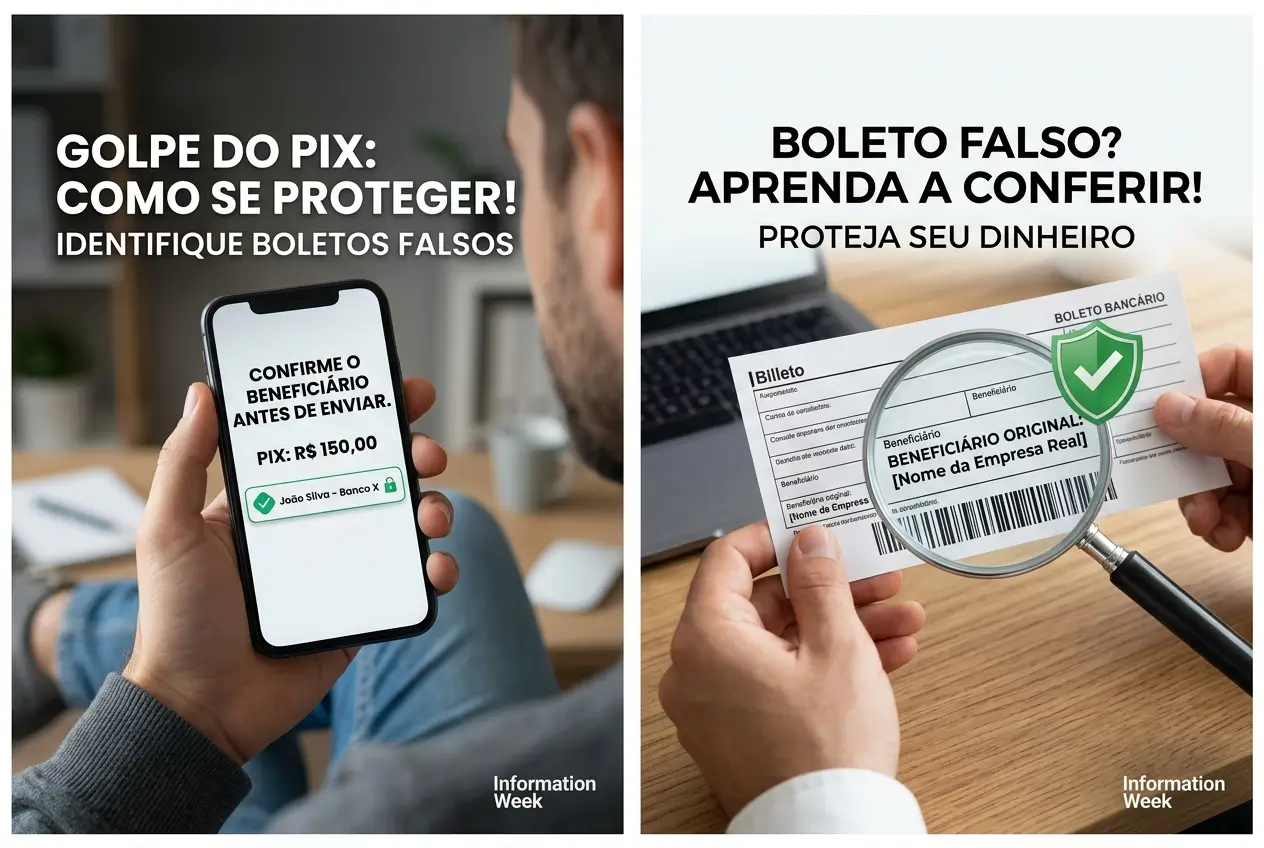
Gold tip: Always compare the name of the beneficiary that appears on the confirmation screen of the bank app with the name of the actual company.
The Pix Copy and Cola scam and the fake QR Code
Pix's agility has also opened doors to new scams.The most common is the one that uses a QR Code or a link “Copia and Cola” tampered.
You may be on a fake website that mimics a well-known store. When you try to pay, the QR Code or the generated code directs your money to an orange.
The rule is the same as the ticket: the confirmation screen of your bank is your best friend. It is in it that you validate who is really receiving the money.
Step by step: how to check the beneficiary before paying
Never pay in a hurry. Follow this simple roadmap for boletos and Pix and avoid headache.
- Scan or type the data: Use your bank app to read the barcode, QR Code or paste the Pix code.
- Stop at the confirmation screen: Before entering the password, a screen will appear with the transaction summary. Don't ignore her.
- Check the beneficiary name: The name and CNPJ (or CPF) that appear are those of the correct company? Ex: Lojas Americanas S.A., and not “Maria da Silva”.
- Check the value: Is the amount to be paid exactly the same as your account or purchase?
- Check the destination institution: Is the target bank that appears on the Pix confirmation screen expected?
- All right? Proceed: If all the information hits, then yes you can enter your password and confirm the payment.
If any information seems strange DON'T MAKE THE PAYMENT. Cancel the operation and contact the company through an official channel.
I received a suspicious ticket.What do I do?
The first rule is to remain calm and not pay. The pressure of a close win is a tactic of scammers to get you to act on impulse.
First, completely discard the boleto or Pix key you received.Do not try to use them in any way.
Then enter the official website from the company or use the application to issue a second way. Never search for the company contact on Google and click on the first link.
Go straight to the site you already know or that is printed on an old account. This is the safest way to secure a legitimate document.
I fell for the scam. Is it possible to recover the money?
Acting fast increases your chances.If you paid a fake ticket or made a Pix for a scammer, time is your enemy.
For payments via Pix, the Central Bank created the MED (Special Return Mechanism). It allows blocking and returning money.
- Step 1: Contact your bank immediately by chat, phone or SAC. Inform about the scam and ask to trigger the MED.
- Step 2: Make an Occurrence Bulletin (B.O.). It can be done online in most states and is critical to formalizing fraud.
- Step 3: Send the B.O. to your bank. They will use the document to analyze the case with the bank of the scammer.
Recovery is not guaranteed, as the scammer can withdraw money quickly.But MED is today the best tool to try to recover the value.
For tickets, the process is more complex, but the path is the same: contact your bank and make the Occurrence Bulletin as soon as possible.
Gold tips to shield your accounts
In addition to checking each payment, some day-to-day practices can dramatically reduce the risk of falling for scams.
- Use the ADD: Authorized Direct Debit is a free service of banks. With it, all tickets issued for your CPF/CNPJ appear directly in the app.
- Prefer official channels: Always issue tickets and Pix codes within the official website or application of the store or service company.
- Be wary of discounts: The” offers with exclusive payment via boleto or Pix are a classic sign of fraud.
- Keep antivirus updated: A good antivirus on mobile and computer can block fake websites and malicious files.
- Do not click on suspicious links: Never click on billing links received by SMS, email or WhatsApp. Always go straight to the source.
Channels for reporting and help
If you have been a victim or identified an attempted scam, reporting is important to help protect others.
The first channel is always your bank.They have security sectors that specialize in fraud and can guide you on the next steps.
You must also register one Occurrence Bulletin in the civil police station, which can be done online in most cases.
Consumer protection agencies, such as your city's Procon, can also offer guidance and broker contact with financial institutions.
Share these tips with friends and family and help build a fraud protection network.
Maybe you might like: